About JP Atmos
We're not cultural experts. We're just people who look closely and write slowly. We make no claim to represent "real Japan" — this is one angle, carefully observed.
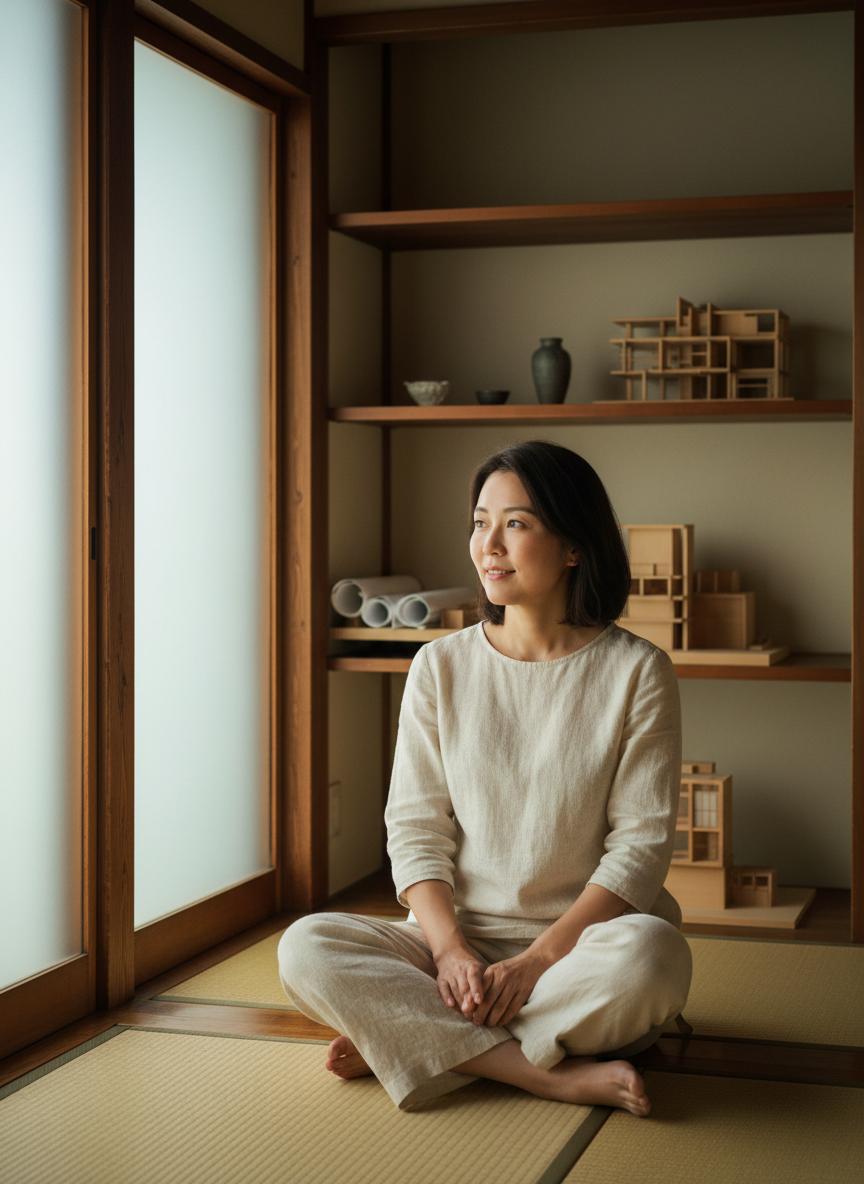
Hannah Mori
Founder & Editor
I moved to Kanazawa in 2017 after a decade working as an architect in Boston, and the first thing that struck me wasn't the temples or the gardens. It was the light. The way morning sun came through my apartment's shoji screens and made the whole room feel like it was breathing. I started taking notes, just for myself at first, about the way light moved through Japanese spaces differently than it did through Western ones. How the architecture seemed designed not to frame views but to filter experience.
Before architecture, I studied photography, and I think that training in seeing has never left me. JP Atmos started as a way to combine these two ways of looking, the architectural and the photographic, into writing that tried to capture what it felt like to be in a place rather than just what that place looked like. I'm interested in the atmosphere of Japan, the feeling of daily life here that can't be captured in a travel guide or a postcard. The way a room sounds when it's empty. The way a street smells at 6am. The way a whole society seems to agree on things without ever discussing them.
I write about light and shadow in buildings, about the small rituals of Japanese domestic life, about the way spaces shape behavior and behavior shapes spaces. I don't write about tourist attractions. I don't write about where to eat or what to see. There are thousands of guides for that. I write about what it feels like to live here, slowly, over time, until the foreign becomes familiar and the familiar becomes worth examining.
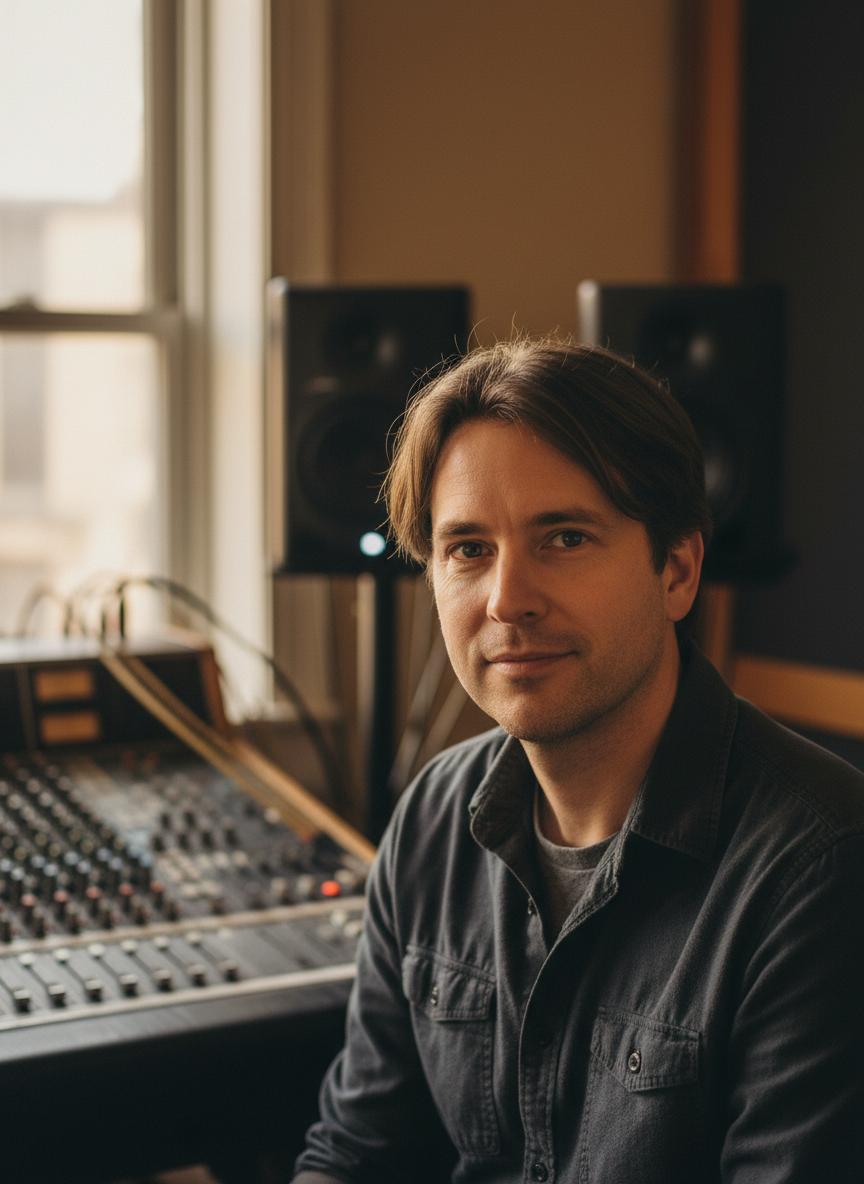
Thomas Wright
Co-founder & Audio Editor
I'm an audio engineer by training, and I came to Japan because I wanted to record the sounds that you can't find anywhere else. The JR train door chimes. The way temple bells resonate differently depending on the humidity. The electronic jingle that plays when a konbini door opens. The sound of rain on traditional tiled roofs. I brought my microphones and my portable recorder, and I started walking around Tokyo and Kanazawa with headphones on, listening to the city the way most people look at it.
What I discovered was that Japan has an acoustic personality that is as distinctive as its visual one. The quiet of a Japanese train is a designed quiet, a collective agreement made audible. The sounds of a Japanese neighborhood in the morning, the crows and the bicycle bells and the distant school chimes, form a composition that changes by the season but never loses its essential character. Even the konbini, which you might think of as a visual experience, has a soundscape: the chime, the hum of the refrigeration, the soft beep of the register, the clerk's voice saying "arigatou gozaimashita" as you leave.
I write about what I hear, but I also write about what listening has taught me to see. Recording sound requires a kind of attention that changes how you move through the world. You start to notice visual details because you're already tuned to acoustic ones. You see the worn spot on a train seat because you've already heard the particular rattle that this section of track makes. My essays for JP Atmos try to translate that synesthetic experience into prose, to make readers hear what I see and see what I hear.
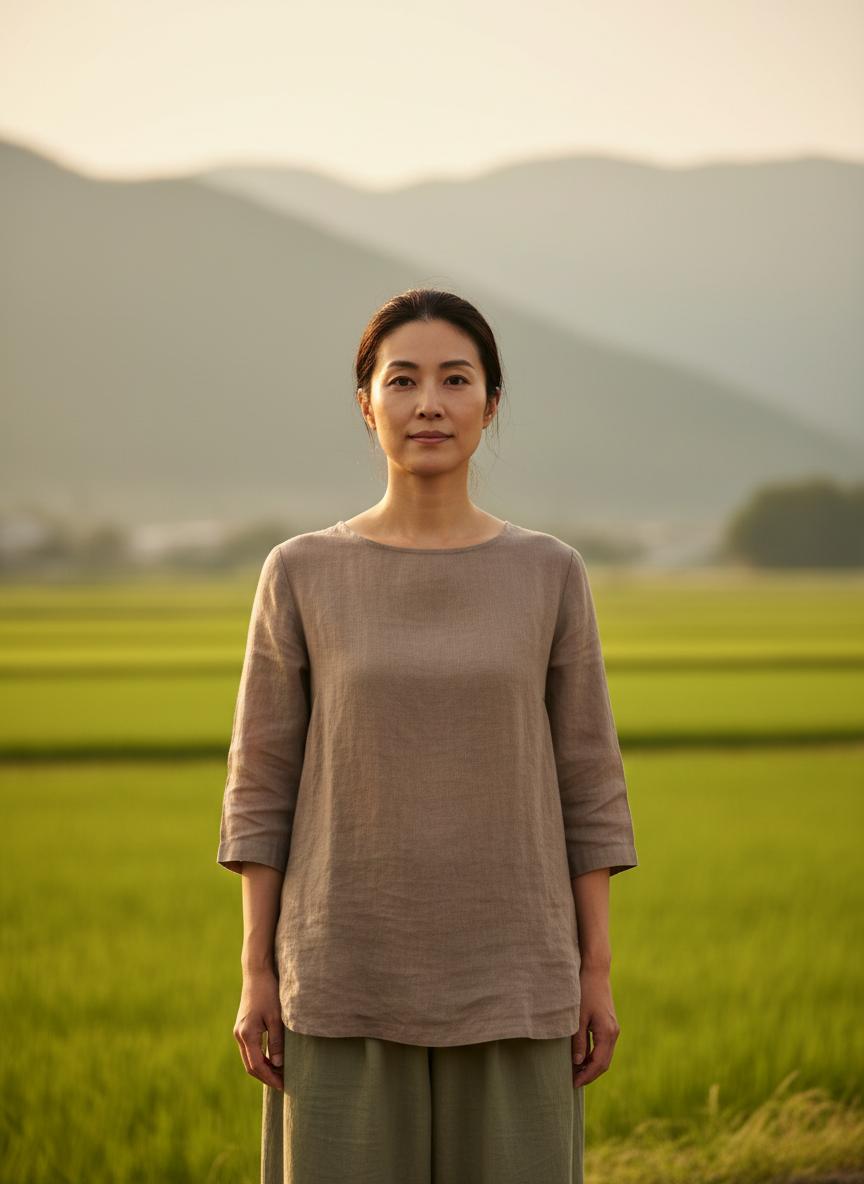
Rei Kobayashi
Contributor
I was born in Gifu, in a small town that most Japanese people have never visited and most foreigners have never heard of. I grew up in the countryside, surrounded by rice fields and mountains, and I didn't move to a city until I was nineteen. That rural upbringing gave me a perspective on Japan that is different from the one you get if you grow up in Tokyo or Osaka. I know what it's like to live in a place where everyone knows your family, where the seasons determine the rhythm of work, where the nearest konbini is a twenty-minute drive and you learn to do without.
I write about rural Japanese life with what Hannah calls unsentimental precision. I don't romanticize the countryside. I know how hard the work is, how isolating it can feel, how young people leave and don't come back. But I also know the specific beauty of a rice field in late summer, when the stalks are heavy and green and the wind moves through them in waves. I know the sound of a river at night when there are no other sounds. I know what it's like to attend a village festival where the same families have danced the same dances for generations.
My essays try to show what Japan looks like outside the cities, where most foreigners spend their time. I write about the aging population, the empty houses, the communities that are shrinking but still holding on. I write about the food traditions that are being preserved by people who will never be famous for them. I write about the kind of Japan that doesn't make it into magazines, the Japan that is ordinary and stubborn and quietly enduring. This is the Japan I know best, and this is the Japan I try to share.
We're not cultural experts. We're not anthropologists. We're not here to explain Japan to you. We're just people who pay attention to the parts of everyday life that most writing about Japan ignores, the small textures and quiet rhythms that make a place feel like itself.
We make no claim to represent "real Japan." There is no single real Japan, any more than there is a single real America or a single real France. What we offer is one angle, carefully observed, written slowly, and offered to readers who are interested in the atmosphere of a place rather than its highlights.
If that sounds like something you're interested in, we hope you'll read our essays and, if you feel moved to do so, write to us. We're a small team, and we read every message, even if it takes us a while to respond.