Wabi-Sabi in Modern Japan
The chipped coffee cup sat on the counter of the kissaten for as long as I'd been coming there, which was going on three years by the time I finally asked the owner about it. It was a simple ceramic mug, cream-colored with a thin blue line around the rim, and the chip was small, no bigger than a grain of rice, on the outer edge where someone's lip would never touch. Most cafes in other countries would have thrown it away immediately, perhaps even used it as an excuse to order a whole new set of cups in the name of "brand consistency." The owner told me, with a shrug that conveyed an entire philosophy, that it still worked fine. That was all. It still worked fine.
I'd been thinking about wabi-sabi for years before I moved to Japan, reading the same books that every Western design enthusiast reads, paging through photographs of moss-covered stone lanterns and weathered wooden tea houses and thinking that I understood what the concept meant. I was wrong. What I had understood was a visual style, an aesthetic that could be replicated and sold. What I encountered in Japan was something else entirely, something that had nothing to do with how things looked and everything to do with how things were allowed to be.
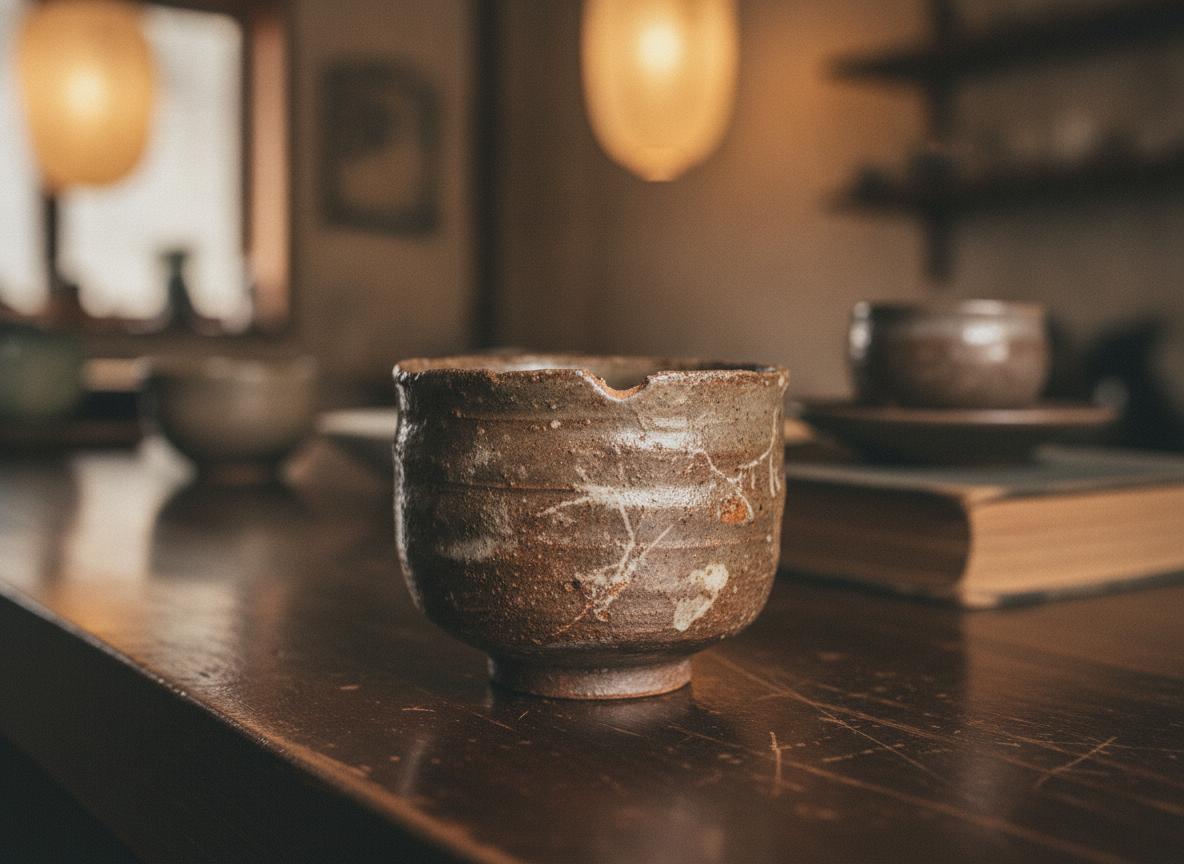
The same cup, three years running. The chip hasn't grown. Neither has the owner's concern.
We in the West have been sold a strange and diminished idea of what wabi-sabi means. We've translated it into "rustic charm" or "perfectly imperfect" and slapped it on ceramic bowls at upscale home goods stores, charging extra for the rough edges that someone carefully manufactured to look accidental. We've created an aesthetic out of something that was never meant to be an aesthetic. We've turned a philosophy of acceptance into a design trend, and in doing so, we've missed the point entirely.
The real thing, the thing you encounter in actual Japanese life, has nothing to do with aesthetics as we typically understand them. It's not about making things look a certain way. It's not about achieving a particular atmosphere or creating a mood. It's about a relationship with time, with use, with the reality that everything changes and everything eventually ends, and that this is not a tragedy but simply the way things are. A chipped cup is not beautiful because it is chipped. It is acceptable because it is still a cup, because the chip does not prevent it from fulfilling its purpose, because replacing it would be wasteful and unnecessary.
I remember the first time I truly saw wabi-sabi, not as a concept but as a lived reality. I was on a train heading north from Tokyo, one of those local lines that stops at every small station along the way, and I noticed that the seat across from me had been worn smooth by thousands of commuters. The fabric was a synthetic blue, the kind of practical color chosen by railway companies for its ability to hide dirt, but in the center of each seat cushion, the nap had been polished to a soft sheen by the friction of human bodies sitting and rising, sitting and rising, day after day, year after year. The wear wasn't uniform. It followed the contours of average human anatomy, slightly deeper where hips rested, shallower toward the edges where fewer people sat.
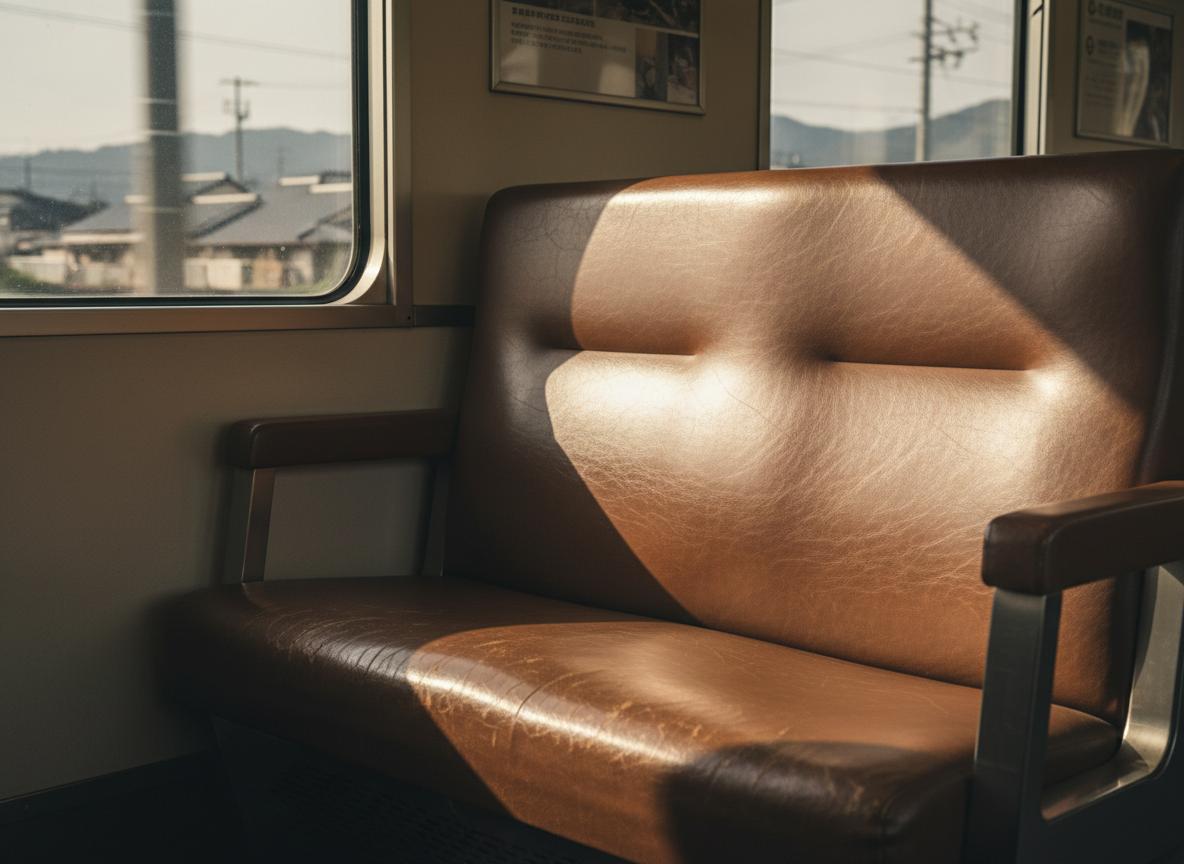
Every train seat carries the geography of its passengers.
In any other country, those seats would have been replaced. The railway company would have seen the wear as damage, as a sign that the interior needed "refreshing," and they would have ripped out the old seats and installed new ones in a blaze of maintenance activity that would be heralded as an "improvement." But the JR line I was riding had left them in place, not because they couldn't afford new seats, not because they were neglectful, but because the seats still worked. They were comfortable. They were clean. The fact that they showed signs of use was not a problem to be solved. It was simply a fact to be accepted.
This is what wabi-sabi actually means. It means understanding that use leaves marks, that time changes things, and that these changes are not degradations but simply the natural course of existence. It means looking at a worn train seat and seeing not something that needs to be fixed but something that has been used well, something that has served its purpose thousands of times over and continues to serve it still.
I started seeing it everywhere after that. The building near my apartment that had been left to patina rather than repainted, its wooden facade silvering in the rain and sun until it looked less like something that had been built and more like something that had grown there, a natural feature of the streetscape. The owner could have slapped on a fresh coat of paint every few years, could have kept the building looking new and crisp and modern. Instead, they allowed it to age, allowed the wood to weather and change, and the result was a building that had character, that had presence, that seemed to belong to its place in a way that freshly painted buildings never quite do.
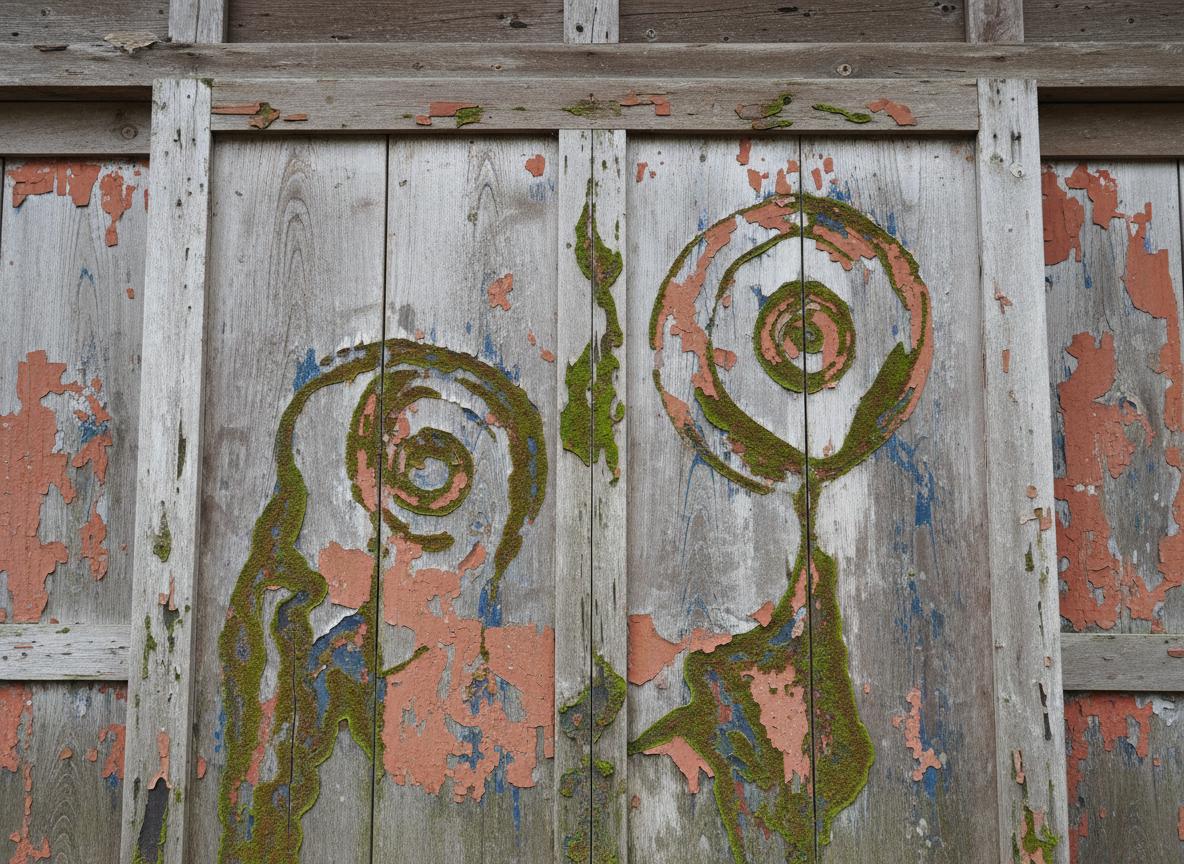
Silvered wood and green moss. No paint required.
There's a temple path I walk sometimes in the early mornings, a narrow stone walkway that winds through a grove of maples behind a small Buddhist temple in the hills outside Kanazawa. In autumn, the leaves fall and cover the path in a carpet of red and gold, and here's the remarkable thing: no one sweeps them. Not for days, sometimes not for weeks. The leaves are allowed to fall, to brown, to curl, to crumble into the cracks between the stones. They become part of the path. They fill the gaps and level the surface and create a texture underfoot that changes with every rain and every wind.
In a Western garden, this would be considered neglect. The leaves would be seen as mess, as something that needed to be cleaned up, and a groundskeeper would be dispatched with a leaf blower to restore order. But the temple understands something that we've forgotten: the leaves are not a mess. They are the garden. The falling of leaves is not an event that happens to the garden; it is the garden happening. To sweep the leaves away would be to deny the garden its autumn, to edit out a chapter of its annual story in the name of tidiness.

The path becomes the leaves. The leaves become the path.
The Western obsession with perfection is, when you really examine it, a kind of violence against time. We sand and repaint and polish and replace, not because things need to be fixed but because we cannot bear the evidence that time has passed. A scratch on a wooden table is not a functional problem. It does not make the table less stable, less useful, less beautiful in any objective sense. But we cannot stand to look at it, because it reminds us that the table has been used, that time has moved forward, that we ourselves are older than we were when the table was new.
We replace our phones every two years not because the old ones stop working but because we want to feel that we are keeping up, that we are not being left behind by the march of progress. We renovate our kitchens not because we can't cook in them but because the cabinets look "dated," as if the passage of time were a design flaw rather than the fundamental condition of existence. We throw away clothes that have developed small holes, repair nothing, and then wonder why we feel anxious and unmoored in a world that seems to change too fast.
Japanese wabi-sabi offers an alternative, though I want to be careful not to romanticize it. Japan is not some magical realm where everyone has achieved enlightenment about the nature of impermanence. Japanese people also buy new phones and renovate kitchens and replace worn-out furniture. But there is a current running through the culture, a set of assumptions about what is acceptable and what is not, that creates space for things to age. There is a tolerance for wear that doesn't exist in the same way in the West, a willingness to let things be what time has made them.
I think about this every time I see the same small businesses in my neighborhood with their faded signage, their awnings that have been bleached by years of sun, their doors that don't quite close with the satisfying click of something new but instead settle into their frames with the soft thump of long acquaintance. These businesses could have updated their signs. They could have installed new awnings. But they didn't, because the old ones still work, because everyone in the neighborhood knows where they are anyway, because there is no shame in looking like you've been around for a while.
The West fetishizes the new. We call it "fresh" and "updated" and "state-of-the-art," and we use these words as if they were inherently positive, as if newer were always better. But there is a kind of wisdom that comes only with age, a kind of depth that accumulates only through use, and wabi-sabi is the practice of recognizing that wisdom and valuing that depth. It's not about pretending that old things are new. It's about understanding that old things have qualities that new things can never have.
I watched an old man repair a paper shoji screen in my building last spring. The screen had developed a small tear near the bottom, probably from someone's foot catching the edge as they walked past, and most landlords would have replaced the whole panel. But this man sat on the floor with a small pot of rice paste and a piece of paper that didn't quite match the original, and he spent an hour carefully patching the tear. The patch was visible. It would always be visible. But the screen worked again, and the patch became part of its history, another layer in the accumulation of small events that made this screen different from every other screen in the world.
That's the thing about wabi-sabi that no amount of reading about it can teach you. It's not a style you can adopt. It's a relationship you develop with the physical world, a willingness to see the marks of time as additions rather than subtractions. The patched shoji screen is not worse than a new one. It's more interesting. It has a story. The patched screen has been lived with, has been damaged and repaired, has passed through human hands and human care, and that makes it something more than a functional object. It makes it a witness.
We live in a culture that treats aging as a problem to be solved, and I think this makes us fundamentally unhappy in ways we don't even recognize. When we expect everything around us to be perfect and new, we are constantly disappointed, because nothing stays perfect and new. When we learn to see the beauty in wear, in patina, in the small damages that accrue through daily living, we free ourselves from that disappointment. We stop fighting time and start living with it.
The chipped cup on the kissaten counter is still there, as far as I know. I haven't been back in a few months, but I imagine it is, because that's the kind of place it is. The chip hasn't grown. The cup still works. And every person who lifts it to their lips is participating in something larger than a transaction, larger than a morning coffee ritual. They are participating in a philosophy that says: this is enough. This is fine. This is exactly as it should be.
And maybe that's the real lesson of wabi-sabi, the one that has nothing to do with design or aesthetics or home decor trends. Maybe it's simply this: that we don't need everything to be perfect. That we don't need to fix everything that shows signs of wear. That we can allow ourselves, and the things around us, and the world we live in, to be exactly what time has made us. Imperfect. Used. Still here. Still working. Still enough.