Morning Tatami Light
The first thing you notice, if you wake up in a Japanese home, is the quality of the light. It doesn't pour in like it does through Western windows, flooding the room with a brightness that forces you into consciousness whether you're ready or not. It seeps. The shoji screens diffuse the morning sun into something softer, something that spreads across the tatami floor in a pale golden wash that makes the straw mats look like they've been brushed with honey. This light is temporary in a way that electric light never is. It changes by the minute, shifting from gold to white to a pale amber as the sun rises higher, and if you pay attention, you can watch a room transform itself before you've even finished your first cup of coffee.
I learned to notice this light slowly, over months of mornings in my small apartment in Kanazawa. At first, I treated the shoji like curtains, something to be opened when I wanted brightness and closed when I wanted darkness. But the light through shoji is not like the light through curtains. A curtain blocks light or lets it through. A shoji transforms it, breaks it into a grid of soft illumination that makes the whole room feel like it's glowing from within. On the best mornings, when the sky is clear and the humidity is low, the light is so even, so gentle, that you can read anywhere in the room without turning on a lamp, and everything you look at seems slightly more beautiful than it actually is.
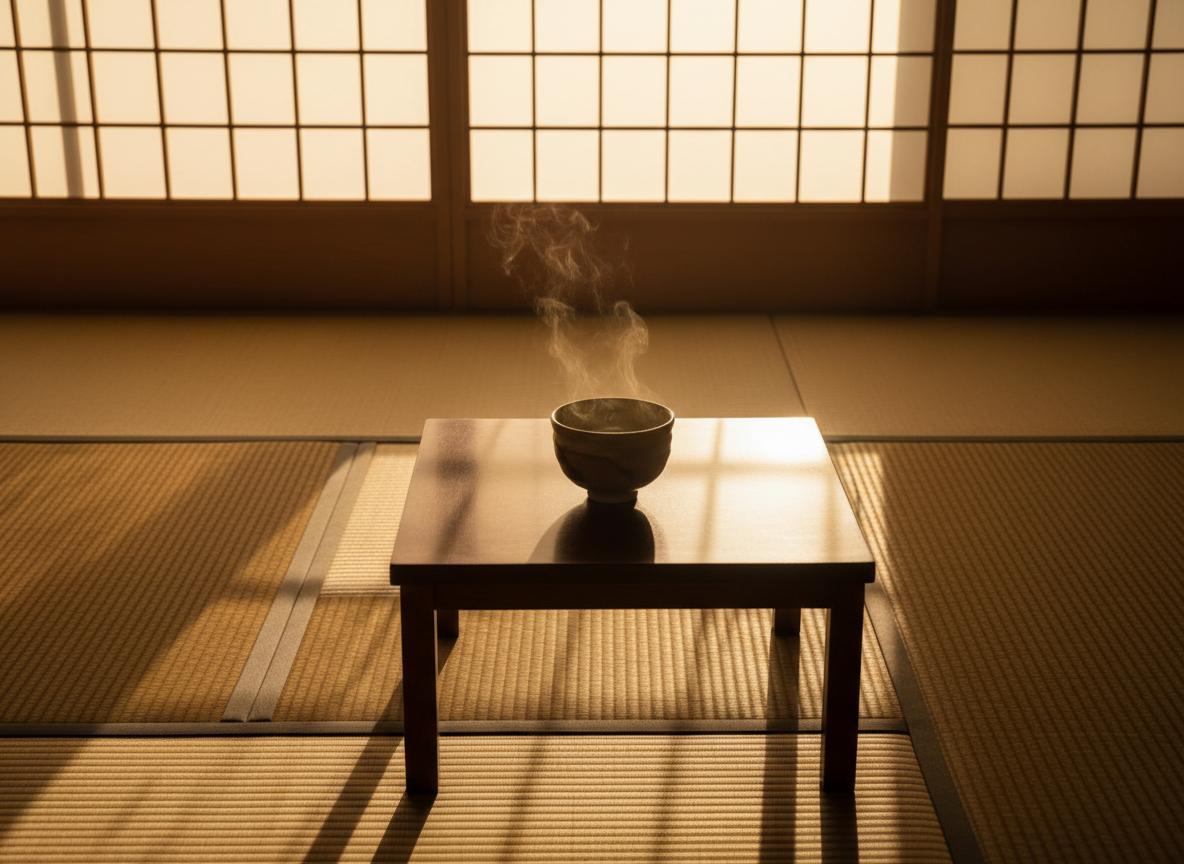
The day begins in gold and shadow.
Japanese mornings have a soundscape all their own, a layered composition that begins before you're fully awake and continues building until the day is unmistakably underway. There's the creak of bicycles as early commuters roll past your window, the rhythmic click of pedals and the occasional bell that sounds different from bicycle bells anywhere else, a single clear note that seems to hang in the air for a fraction of a second longer than you expect. Crows call to each other from the electrical wires with that rough, authoritative voice that crows seem to have everywhere in the world but which somehow sounds more deliberate here, more like a conversation and less like random noise.
If you live near a school, you'll hear the distant chime of the morning bell, not the harsh electronic buzzer that I grew up with but a musical tone, often a single clear note struck on a xylophone or a synthesized chime that sounds almost like a xylophone. The children start arriving shortly after, and their voices carry across the quiet neighborhood in bursts of energy and excitement that contrast with the stillness of everything else. They walk to school in groups, wearing uniforms that make them look like small corporate employees, and their chatter is the first human sound of the day that isn't solitary.
Making coffee in a tiny Japanese kitchen is an exercise in spatial efficiency that becomes meditative once you get used to it. My kitchen was exactly six feet wide, a galley space with a two-burner gas stove on one side and a narrow counter with a sink on the other. There was no dishwasher. There was no space for one. Every tool had its designated spot, and if you took something out, you had to put it back before you could do anything else, because there was literally no counter space for clutter. The coffee maker was a small pour-over dripper that sat on top of a glass carafe, and the ritual of heating water, grinding beans, pouring the first stream in a slow spiral to let the coffee bloom, then filling the dripper to the top and watching the dark liquid filter through, this ritual took exactly the right amount of time for the light to change from gold to white.
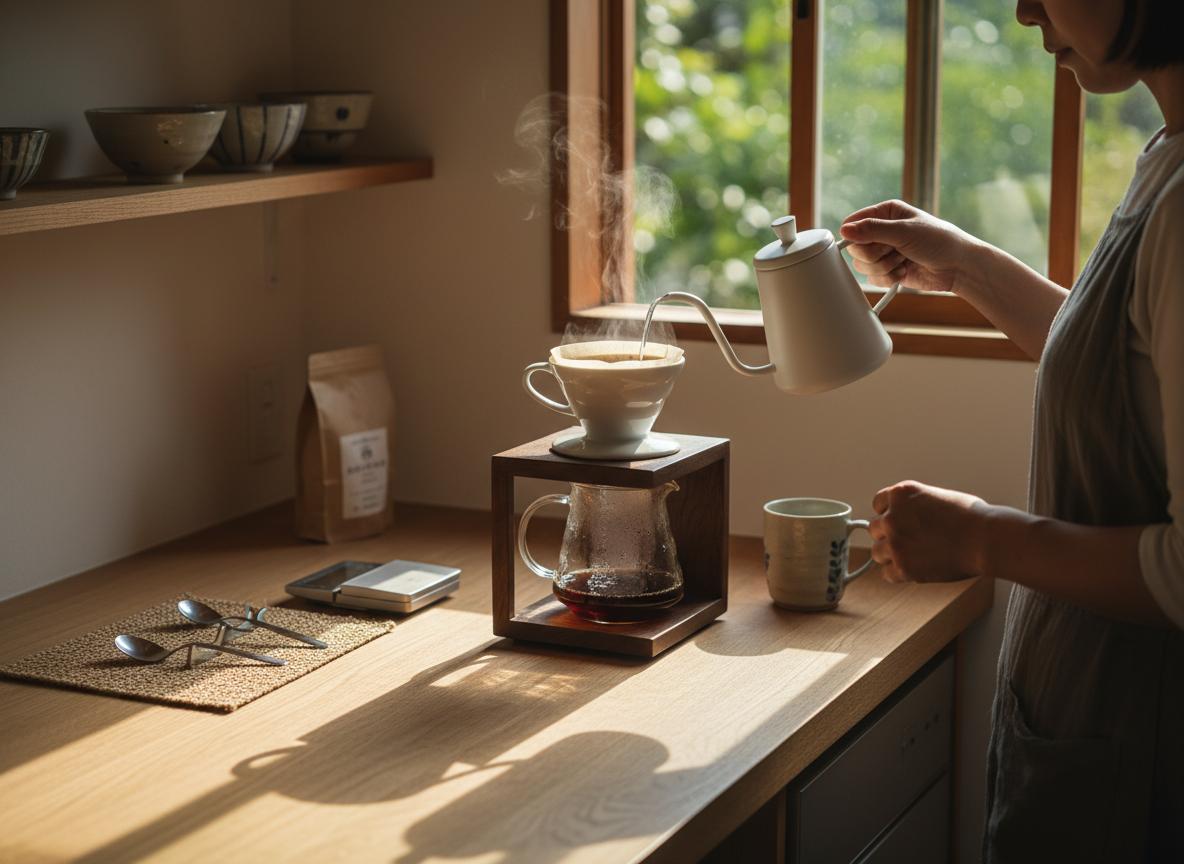
The only counter space is the one you keep clear.
The bath versus shower culture in Japan is something that every foreigner has to learn, and it's more fundamental to daily life than I ever expected. In the West, we shower in the morning. It's how we wake up, how we prepare ourselves for the day, how we wash away the sleep. But in Japan, the shower is for cleaning yourself, and the bath, the ofuro, is for soaking, and this happens in the evening, not the morning. You wash yourself thoroughly at the shower station, sitting on a small stool and rinsing with a hand-held shower head, and only when you're completely clean do you lower yourself into the deep tub of hot water to soak.
This distinction between cleaning and soaking is more important than it sounds. The morning shower that Westerners use to wake up is a rushed affair, a utilitarian function performed while still half-asleep. The evening bath is something else entirely. It's a transition between the day and the night, a ritual of relaxation that signals to your body that it's time to shift gears. The water is hot, much hotter than most Westerners are used to, and you sink into it up to your chin, feeling your muscles release and your mind slow down. It's not about getting clean. You got clean before you got in. It's about being in hot water, about the way heat changes your relationship to your own body, about the simple pleasure of warmth when the evening is cool.
Hanging laundry on the balcony before work is one of those small domestic rituals that defines Japanese morning life in a way that I never understood until I started doing it myself. Every apartment has a balcony, and every balcony has a clothes-drying rack or a set of poles that extend outward over the railing. In the morning, you take the laundry that you washed the night before, still slightly damp from the spin cycle, and you hang it piece by piece, securing each item with small plastic clothespins that you buy by the bag at the hundred-yen shop. Shirts get hung from the shoulders so they don't stretch. Socks get paired and hung by the toes. Towels get hung lengthwise so they'll dry evenly.
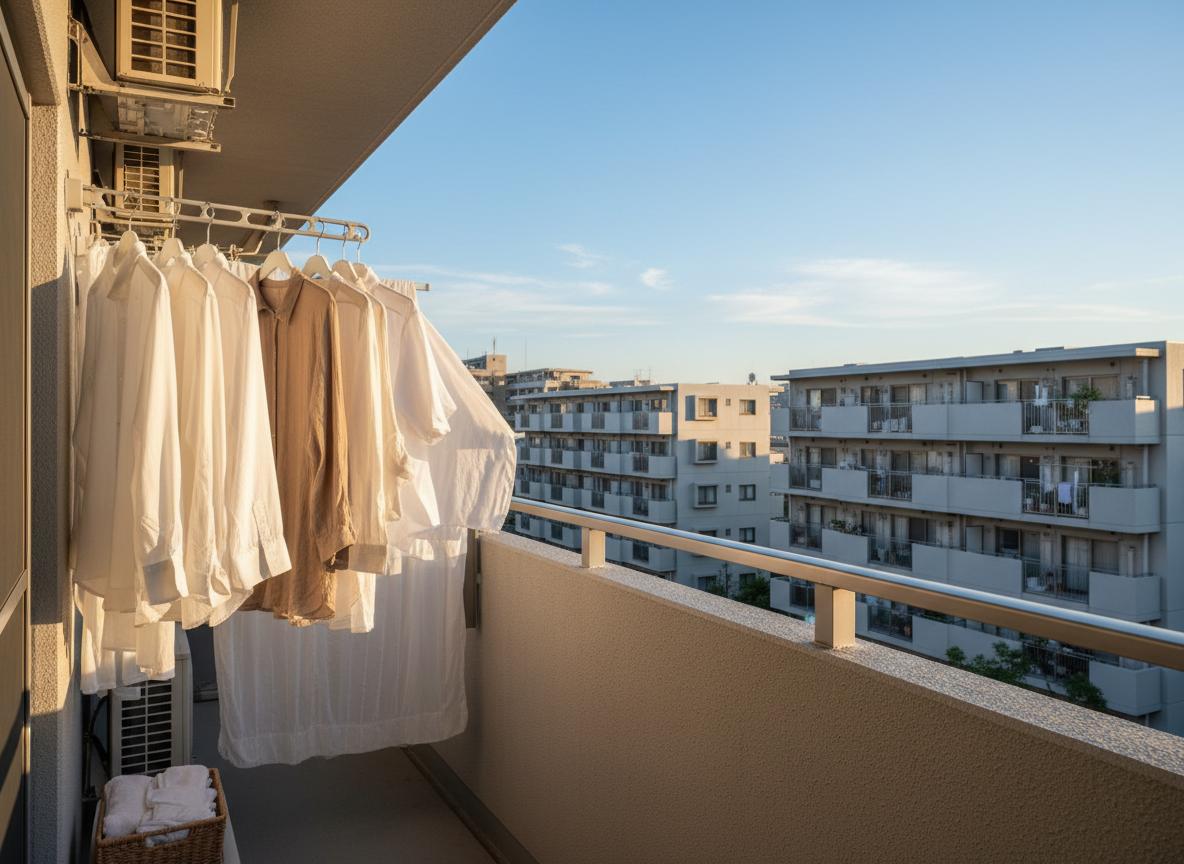
Every balcony tells you what day it is.
By the time you've finished hanging the laundry, your neighbors have started hanging theirs too, and if you look across the apartment complex, you can see rows of balconies with rows of clothes gently moving in the morning breeze, white shirts and blue sheets and the occasional flash of color from a child's T-shirt. It's a communal activity performed in isolation, each person in their own private space doing the exact same thing at the exact same time, and there's something beautiful about that synchronization, that shared rhythm of daily life.
The neighborhood trash pickup routine is another of these shared rhythms, and it's so precise that you can tell what day it is by the sound of what people are carrying downstairs. Burnable trash goes out on Mondays and Thursdays. Recyclables on Tuesdays. Non-burnable on Wednesdays. And on the mornings when trash goes out, you hear people descending the stairs with bags in their hands, the soft rustle of plastic and the occasional metallic clink of a can or a bottle. Everyone knows the schedule. Everyone follows it. The trash appears on the curb at the designated time, arranged neatly in the designated nets or bins, and the truck comes and takes it away, and no one has to think about it because everyone knows exactly what to do.
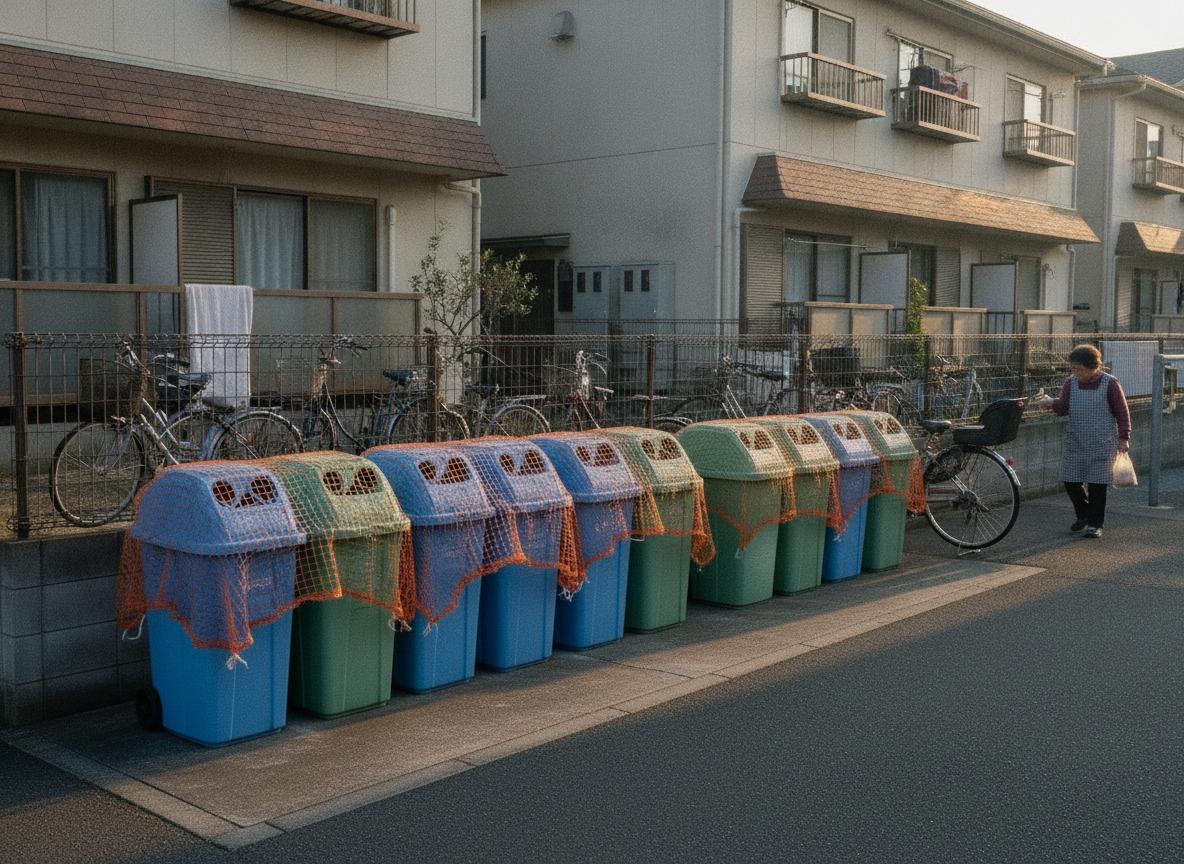
The schedule is known by sound, not by calendar.
I was once woken up at 6:30 on a Monday morning by the sound of my neighbor taking out her burnable trash. I knew it was burnable trash because the bag made a particular sound, a soft crinkle of plastic wrapping and food containers, different from the clatter of bottles or the dull thud of larger items. I lay in bed listening to her walk down the stairs, open the building's trash enclosure, deposit her bag, and walk back up. It took maybe ninety seconds. But in those ninety seconds, I knew exactly what day it was, what time it was, and what my neighbor was doing with her morning. The trash schedule is a shared language, a communal metronome that keeps the neighborhood in rhythm.
What I've come to understand, after years of living in Japan and returning to the same small apartment each time I come back, is that Japanese mornings feel slower not because they actually are. People are just as rushed, just as busy, just as aware of the clock as anyone anywhere else in the world. The difference is that the morning asks you to notice it. The light asks you to look at it. The sounds ask you to listen. The rituals of morning, from hanging laundry on the balcony to rinsing out the bath from the night before, ask you to be present in a way that rushing through a bowl of cereal and running out the door simply doesn't.
There's a word in Japanese, "teinei," that means polite or careful or proper, but it carries a connotation of doing things with attention, of performing even the smallest task as if it matters. And in the Japanese morning, everything is done with teinei. The coffee is made carefully, even if the kitchen is tiny. The laundry is hung precisely, even if you're running late. The trash is sorted correctly, even if it's raining and you'd rather just throw everything in one bag. These small acts of care accumulate into a morning that feels dignified, that feels like the day is being begun properly rather than just stumbled into.
I used to think that the slowness of Japanese mornings was an illusion, a trick of the light and the quiet that made time seem to move differently than it actually did. But I've come to think that it's more than that. The morning is actually the same length everywhere. The clock moves at the same speed in Tokyo as it does in New York. But what happens during that time, the quality of attention that is brought to bear on the simple acts of starting a day, that is different. And that difference is real, even if you can't measure it with a watch.
On my last morning in Kanazawa before returning to Vermont, I woke up before dawn and lay in the dark listening to the neighborhood begin its day. First the crows, then the bicycles, then the distant chime of the school bell. I got up and made coffee in my tiny kitchen, watching the light change through the shoji as I poured water through the grounds. I hung a small load of laundry on the balcony even though I wouldn't be there to take it in, because my flight wasn't until afternoon and the clothes would be dry by then. I stood on the balcony with my coffee and watched the morning unfold across the apartment complex, rows of balconies with their drying clothes, the sky turning from grey to pink to blue, the city waking up in its quiet, organized, inexorable way.
And I realized that what I would miss, more than anything else, was not the big things, not the temples or the festivals or the food, but this. The morning light through shoji. The sound of crows on the wires. The ritual of coffee in a space too small for anything but care. The feeling of a day begun slowly, properly, with attention to the small things that make a life what it is. Japanese mornings had taught me to notice, and noticing had made me slower, and being slower had made me, in some way I still don't fully understand, more alive.
The laundry flapped gently on the balcony railing. A crow landed on the wire outside my window and looked at me with one dark eye, then flew away. The light through the shoji shifted from gold to white, and I knew that the day had begun, that it was time to finish my coffee and begin the process of leaving. But for a few more minutes, I stood there, watching, listening, being present in a morning that would never come again, in a place that had taught me how to begin a day.